The 15th International Workshop on Genetic Improvement @ICSE 2026

Navigation: Event, Important Dates, Keynote, Accepted Papers, Schedule, CFP, Workshops Chairs, Program Committee
Event
The 15th instalment of the GI workshop took place in Rio de Janeiro, Brazil, co-located with the 48th International Conference on Software Engineering, ICSE 2026, which will be held at the Windsor Barra Hotel.
- best paper award: GI-Agent Search-Based LLM Agent for Code Optimization with Genetic Improvement — Donghyun Lee, William B. Langdon, and Justyna Petke
- best presentation award: Applying Genetic Improvement Techniques for Automated Program Repair of Transpiled Code — Prasham Jadhwani, Carol Hanna, William B. Langdon, and Justyna Petke
The Windsor Barra is a beachfront convention hotel with extensive meeting facilities and is part of a larger hospitality complex that includes several other Windsor hotels in the area, offering convenient accommodation options for conference attendees. The hotel is situated directly across from Barra Beach and is a short distance from restaurants, shopping malls such as BarraShopping and VillageMall, and ecological parks.
Barra da Tijuca is easily accessible from Rio de Janeiro’s main airports and is connected to the city center and the South Zone via the BRT (Bus Rapid Transit) and metro system. The venue is approximately 30 minutes by car from key cultural landmarks such as Christ the Redeemer, Sugarloaf Mountain, and the iconic neighborhoods of Copacabana and Ipanema.
The workshop is expected to be held in-person. In case of a virtual or hybrid event, virtual presentations may be possible.
Important Dates
Submission Deadline: 27 October 2025 (Mon) (previously 20 October 2025)Notification: 24 November 2025 (Mon)Camera-ready: 26 January 2026 (Mon)- Workshop: 13 April 2026 (Mon) (previously 12 April 2026)
Keynote
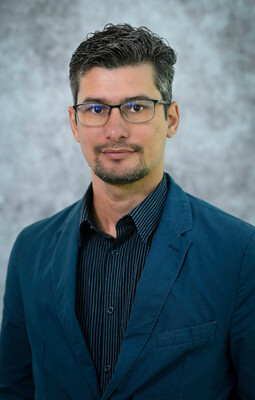
We are happy to announce that Dr. Wesley Klewerton Guez Assunção, Associate Professor in the Department of Computer Science, North Carolina State University, USA, will give the keynote speech at GI@ICSE 2026.
Genetic Improvement for Software Modernization, Synergy and Opportunities
Software modernization has become a critical activity in contemporary software engineering, driven by rapid technological change, increasing system complexity, and the growing pressure for organizations to remain competitive while preserving the business value embedded in long-lived legacy systems. Modernization focuses on transforming legacy software into maintainable, modular, and adaptable systems that leverage new technologies. Genetic Improvement (GI) has demonstrated strong potential to automatically repair, optimize, and evolve software systems using search-based and generative AI techniques. In this talk, I will argue that GI can play a transformative role in modernization by automatically exploring and synthesizing software variants, addressing key activities in software modernization, such as automated refactoring, system decomposition, and program translation. I will emphasize key open challenges where GI research can have an immediate impact. Ultimately, the talk will outline a research vision where GI becomes a practical modernization engine, synergizing with software engineering processes and emerging AI-based techniques.
Wesley K. G. Assunção is an Associate Professor with the Department of Computer Science at North Carolina State University. Wesley was a University Assistant in the Institute of Software Systems Engineering (ISSE) at Johannes Kepler University Linz (JKU), Austria (2021-2023); a Postdoctoral Researcher at Pontifical Catholic University of Rio de Janeiro (PUC-Rio), Brazil (2019-2023); and an Associate Professor at Federal University of Technology - Paraná, Brazil (2013 to 2020). He obtained his MSc and PhD in Computer Science from Federal University of Paraná (UFPR) also in Brazil. He published many research papers, in collaboration with students and well-known and international researchers, in conferences like ICSE, ICSME, SANER, MSR, EASE, SPLC, SSBSE, GECCO, to cite some, as well as in journals such as EMSE, IST, and JSS. Wesley has also been serving as reviewers for many conferences and journal, and as organizer of conference, symposiums, workshops, competitions, and meetings.
Accepted Papers
Applying Genetic Improvement Techniques for Automated Program Repair of Transpiled Code
by Prasham Jadhwani, Carol Hanna, William B. Langdon, and Justyna Petke
DOI PDF VIDEO
Abstract
Databending as a Target for Genetic Improvement
by Erik Fredericks, Byron DeVries, and Reihaneh Hariri
DOI PDF VIDEO VIDEO URL
Abstract
GI-Agent Search-Based LLM Agent for Code Optimization with Genetic Improvement
by Donghyun Lee, William B. Langdon, and Justyna Petke
DOI PDF VIDEO
Abstract
Improving a Parallel C++ Intel SSE SIMD Linear Genetic Programming Interpreter
by William B. Langdon and Carol Hanna
DOI PDF VIDEO VIDEO
Abstract
Schedule
This schedule appears in Rio de Janeiro’s time zone (GMT-3, Brasília Time); compare to your timezone here.
Presentations for full papers are 20 minutes long, followed by 10 minutes for questions.
Presentations for short papers consist of a 10 minute talk, followed by 5 minutes for questions.
The workshop will take place at the Windsor Barra Hotel in Room Bora Bora IV. See also the schedule on the ICSE website for easy bookmarking.
- Monday 13 April 2026 09:00-10:30 (90 minutes; chair: Vesna Nowack)
- 09:00: Welcome and Introductions - Aymeric Blot (10 minutes)
- 09:10: Keynote speech — Genetic Improvement for Software Modernization: Synergy and Opportunities — Wesley Klewerton Guez Assunção (60 minutes)
- 10:10: Improving a Parallel C++ Intel SSE SIMD Linear Genetic Programming Interpreter — William B. Langdon and Carol Hanna (15+5 minutes)
- 10:30: Break & Morning tea (30 minutes)
- Monday 13 April 2026 11:00-12:30 (90 minutes; chair: Aymeric Blot)
- 11:00: Mini-Tutorial (30 minutes)
- 11:30: Applying Genetic Improvement Techniques for Automated Program Repair of Transpiled Code — Prasham Jadhwani, Carol Hanna, William B. Langdon, and Justyna Petke (15+5 minutes)
- 11:50: GI-Agent: Search-Based LLM Agent for Code Optimization with Genetic Improvement — Donghyun Lee, William B. Langdon, and Justyna Petke (15+5 minutes)
- 12:10: Databending as a Target for Genetic Improvement — Erik Fredericks, Byron DeVries, and Reihaneh Hariri (12+3 minutes)
- 12:25: Closing (5 minutes)
- 12:30: Lunch (90 minutes)
Call For Submissions – Submit Here
We invite submissions that discuss recent developments in all areas of research on, and applications of, Genetic Improvement. The International Workshop on Genetic Improvement is the premier workshop in the field and provides an opportunity for researchers interested in automated program repair and software optimisation to disseminate their work, exchange ideas, and discover new research directions.
Topics of interest include both the theory and practice of Genetic Improvement. Applications of GI include, but are not limited to, using GI to:
- Improve runtime efficiency
- Decrease memory consumption
- Decrease energy consumption
- Transplant new functionality
- Specialise software
- Generate multiple versions of software
- Improve low level or binary code
- Use of Large Language Models with GI
- Use of AI with GI
- Repair bugs
- GI techniques in industrial settings
The workshop emphasises interaction and discussion between participants.
Authors are encouraged to submit early and in-progress work.
We invite three types of submissions:
- Research papers (eight page limit, including references)
- Position papers (two page limit, including references)
- Extended abstracts (five pages limit, including references, free of APC charges)
Papers should be submitted electronically here and must conform to the ACM conference proceedings template as per the ICSE submission process (template)
Accepted papers must be presented at GI 2026 and will appear in the ICSE workshops volume. The official publication date of the workshop proceedings is the date the proceedings are made available by ACM.
The best paper and best presentation will be awarded during the workshop.
Workshop Chairs

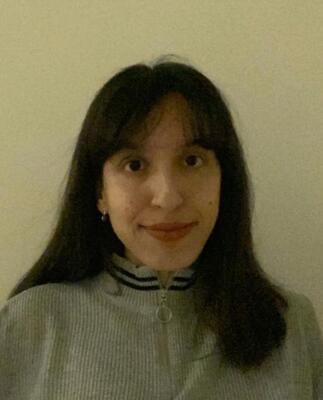
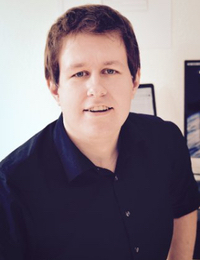
Aymeric Blot is a Senior Lecturer at the University of Rennes and a member of the IRISA research centre in the joint Inria/IRISA DiverSE team. After receiving a doctorate from the University of Lille, focused on automated algorithm design for multi-objective combinatorial optimisation, they moved to University College London to work on software specialization using genetic improvement. Currently working on developing and maintaining the Magpie automated software improvement framework.

Oliver Krauss received his doctorate in 2022 in Pattern Mining and Genetic Improvement in Compilers and Interpeters. His research focuses on mining patterns in software, as well as data, to improve runtime performance and energy consumption. He maintains several open source frameworks, such as Amaru.
Program Committee







ICSE 2026 Sponsors